Rumer Font for Elegant, Consistent Branding
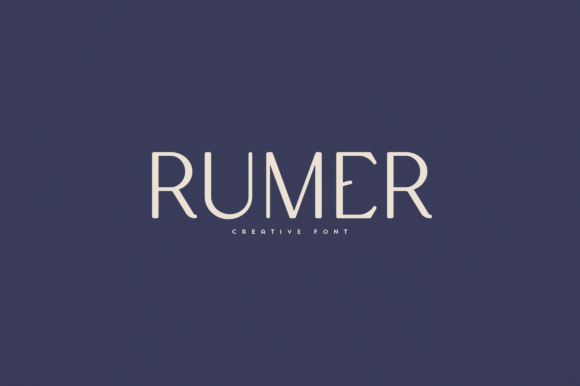
As a small business owner who designs my own labels, social posts, and packaging, I know how much a single Rumer font can shift the entire perception of my brand — not just in looks, but in trust, cohesion, and quiet confidence. Rumer is an elegant and versatile Display typeface that makes typography feel intentional, refined, and unmistakably yours. It’s not flashy or overdesigned — it’s quietly expressive, with graceful curves and balanced proportions that read beautifully across print and screen. Whether you're launching handmade home-ware, curating a boutique skincare line, or building a coaching practice rooted in calm sophistication, Rumer delivers a premium, human-centered presence without demanding design expertise.
Rumer for Logo Design and Brand Identity Systems
When your logo is the first thing customers see — on a shop window, Instagram bio, or product tag — it needs to communicate clarity and care in under two seconds. Rumer works powerfully here because it’s a Display font built for impact: strong enough to stand alone as a wordmark, yet nuanced enough to avoid looking stiff or corporate. I used Rumer for my ceramic studio’s logo, pairing it with a clean sans serif for body text — and instantly, my brand felt more cohesive across my website, business cards, and Etsy banner. Because Rumer is designed to enchant every logo and branding application, it helps unify otherwise disparate touchpoints: the same warmth appears on your sticker seal, your receipt footer, and your “Thank You” card. That consistency builds recognition — and recognition builds loyalty.
Rumer for Home-Ware Packaging and Product Labels
If you make candles, linen goods, apothecary items, or artisanal kitchenware, Rumer elevates your home-ware d (as described in its official positioning) with tactile elegance. Its subtle contrast and open letterforms hold up beautifully at small sizes — think 8–10pt on a soy wax jar label or woven fabric tag. Unlike overly ornate script fonts, Rumer stays legible even when printed on kraft paper or embossed onto cotton pouches. I tested it on matte black candle jars with gold foil stamping — and the result looked boutique-ready, not DIY. As a Display font, Rumer shines brightest as your primary brand typeface on packaging front panels, but it also works thoughtfully as an accent: try it for “Hand-poured,” “Small Batch,” or “Made in Portland” — short phrases where tone matters more than volume.
Rumer for Website Headlines and Social Media Graphics
Your website banner, Instagram carousel headline, or Pinterest pin title has less than a second to earn attention — and Rumer delivers that pause. Because it’s a Display font optimized for visual hierarchy, it commands focus without shouting. I use Rumer for H1s and hero section text on my Shopify site, then switch to a neutral sans serif (like Inter or Poppins) for paragraphs. This pairing feels intentional, not accidental — and that intention reads as professionalism to customers. On mobile, Rumer retains its grace: no awkward spacing, no collapsed serifs, no pixelation. For Canva-based social graphics, I apply Rumer to quote overlays, launch announcements, or seasonal campaign headers — always keeping it at 36pt or larger for optimal readability in thumbnails.
Rumer for Wedding Invitations and Elegant Branding
Even if you’re not a wedding stationer, this use case reveals something essential about Rumer: it carries emotional weight. Its rhythm and soft contrast evoke sincerity, timelessness, and care — qualities every service-based or experience-led business (think yoga studios, floral designers, or boutique hotels) wants to embody. When I designed invitation suites for a friend’s micro-wedding, Rumer gave the suite a sense of hushed reverence — never fussy, never cold. That same energy translates to “About Me” pages, client welcome emails, or even handwritten-style thank-you notes included with orders. As a Fonts choice for elevated personal branding, Rumer tells your audience, *“I value this moment — and I value you.”*
Rumer for Menus, Flyers, and Local Marketing Materials
For café owners, florists, or neighborhood boutiques, local marketing lives and dies by visual warmth and approachability. Rumer excels here because it’s both distinctive and grounded — unlike ultra-thin fonts that vanish on newsprint or overly geometric ones that feel sterile. I printed a double-sided A5 flyer using Rumer for the event title (“Spring Bloom Workshop”) and a warm serif for details — and customers told me it “felt like an invitation, not an ad.” As a Display font, Rumer should anchor your layout (menu headers, flyer titles, poster slogans), while supporting typefaces handle the rest. Always test print samples: Rumer renders cleanly on uncoated stock and holds contrast well on textured paper.
Rumer Font Licensing for Commercial Use
Before applying Rumer to product labels, digital templates, client deliverables, or merch, verify the license covers commercial use — especially for physical goods and resale. Most reputable Fonts sellers offer clear licensing tiers: standard desktop use (for internal branding), extended licenses (for packaging, templates, or SaaS platforms), and webfont licenses (for live websites). Since Rumer is positioned for real-world branding projects — including home-ware d — confirm your license permits use on stickers, tags, and printed collateral. Skipping this step risks takedowns or legal friction down the line. When in doubt, contact the foundry directly — most respond within 48 hours.
How to Test Rumer Before Full Rollout
- Download the free trial or specimen file and mock up one real asset: your best-selling product label or top-performing Instagram post.
- Print it at actual size — does it retain elegance on your chosen paper or material?
- Ask three customers or colleagues: *“What feeling does this font give you?”* Look for words like “calm,” “trusted,” “thoughtful,” or “crafted.”
- Pair it with one simple sans serif (e.g., Montserrat, Lato) and preview both on desktop and mobile — does the contrast support, not compete?